Architectural Animation: Discover the Power of Motion in Architecture

If a single image can express a thousand words, then architectural animation can tell an entire story.

Unlike a still rendering, animation adds movement, rhythm, and emotion to architectural presentation. It reveals how a space breathes, how light moves across surfaces, and how the design interacts with its surroundings.

At CoherenceVisual, we specialize in creating cinematic architectural animations that showcase buildings in their full context. Whether it’s a residential project, commercial development, or conceptual design, our animations provide a clear, memorable, and emotionally engaging visual experience.

Animations go beyond showing what a space looks like — they demonstrate how it feels to inhabit it.
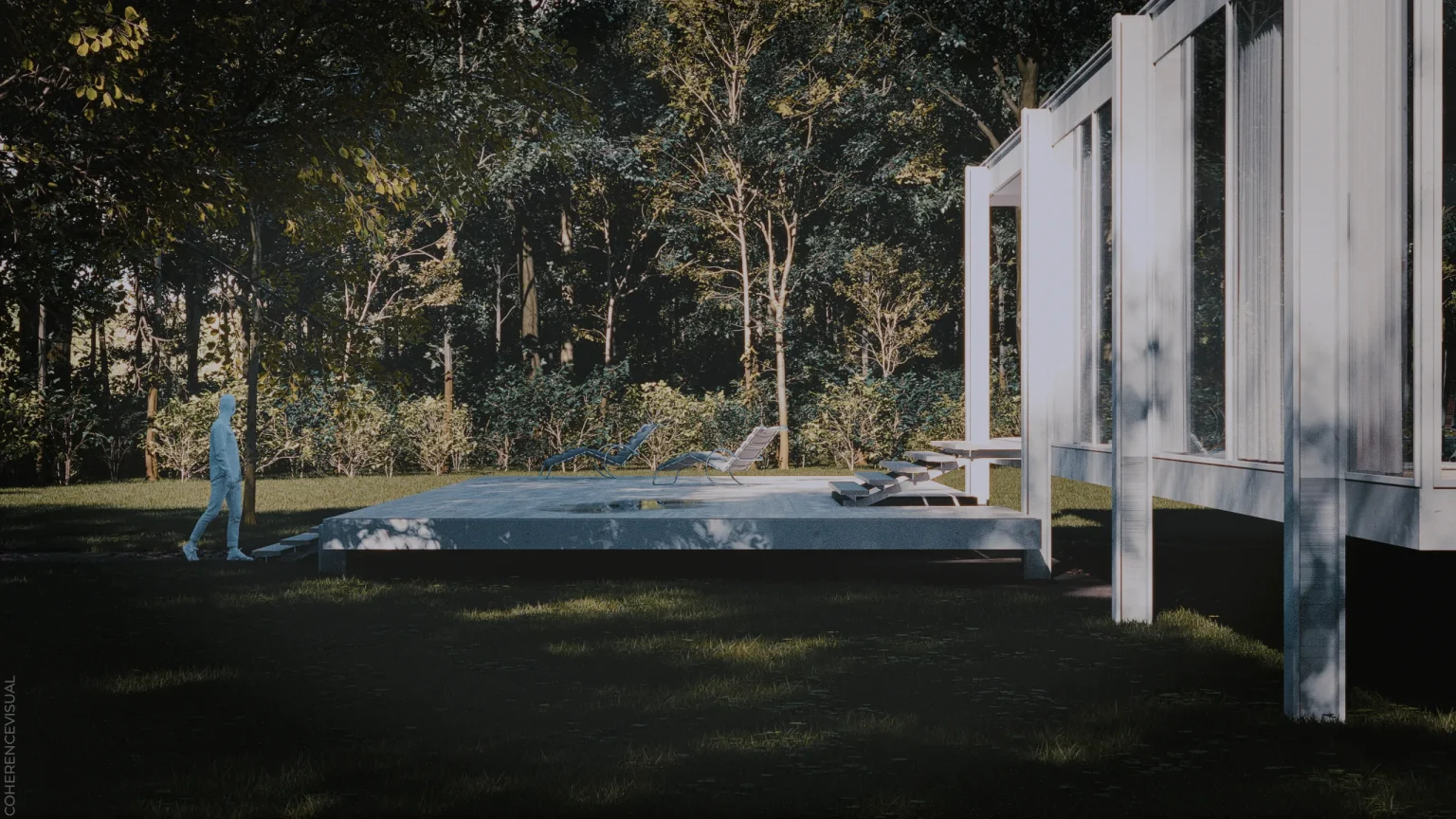
Farnsworth house - seide elevation in the morning -You can see the lower terrace

A static image freezes a single moment in time.

Animation, on the other hand, lets that moment flow.

It takes viewers on a journeythrough rooms, around corners, across facadeshelping them experience design intent through motion and perspective.

In an architectural animation, everything is revealed in context. The surrounding environment, landscape, furniture, and lighting conditions all move together to create an integrated visual narrative.

This makes animation a powerful storytelling tool for architects, developers, and designers who want to communicate vision and atmosphere effectively.

The biggest strength of architectural animation lies in its dynamic nature.    Camera movement, depth of field, focus shifts, and music work together to create an emotional connection that static renderings can’t achieve.    Animations are particularly effective for:    Highlighting key architectural features such as facade rhythm or interior layout.    Demonstrating material transitions and lighting performance.    Showing how spaces relate to each other in real use


A well-planned animation gives clients a complete, intuitive understanding of the project — both the big picture and the smallest design detail.

Architectural animation allows more than just camera movement — it can show functionality in motion.
Doors can open smoothly, blinds can adjust automatically, lights can switch on as day turns to night.

This is especially effective for projects featuring smart home technology, kinetic architecture, or responsive design. Animation lets clients visualize how the space works, not just how it looks.

Adding subtle animated details — such as moving people, vehicles, or changing weather — enhances realism and strengthens immersion.

Farnsworth house - back side elevation in the morning - There is a big tree in the background of the building. The sun shines through the leaves of the tree.

A successful architectural animation does more than display geometry.    It creates atmosphere — the emotional tone of a space.    Through the careful use of lighting, music, sound design, and time of day transitions, animation communicates a building’s intended mood.    Whether the feeling is calm and minimal, nature-inspired, or urban and vibrant, animation helps the viewer emotionally connect with the design vision.    We use cinematic techniques like natural camera motion, balanced pacing, and composition inspired by real-world film production.
The result? A short film that feels authentic, artistic, and unforgettable.

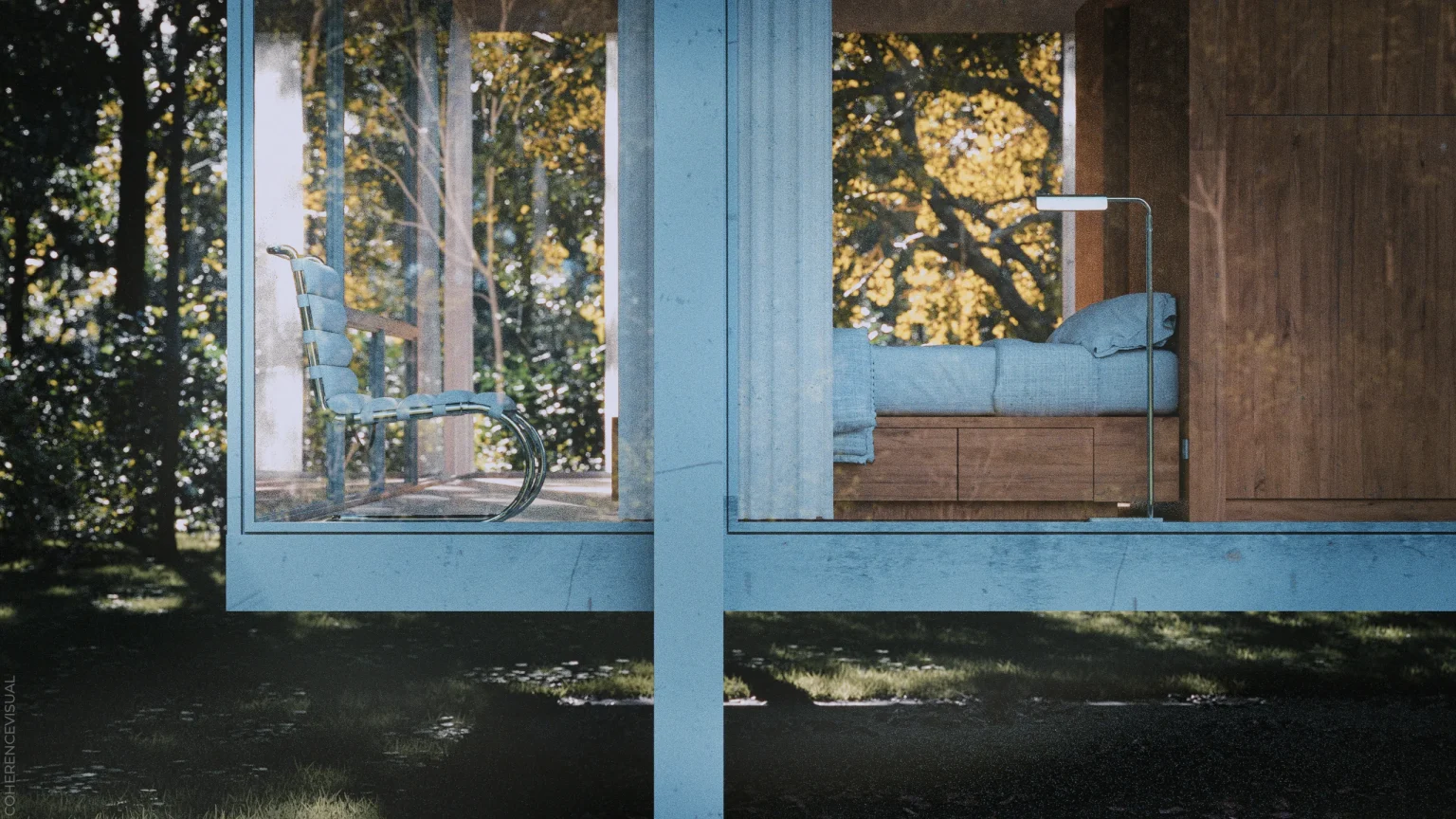
Farnsworth House - back side elevation - You can see the sleeping area with a modern chair. There are white curtains behind the glasses of facade.

Creating an animation requires far more resources than producing still renderings.
Each second of animation consists of at least 24 individual frames. Even a brief 10-second clip can mean rendering 240 frames or more.

This level of production demands detailed planning, efficient workflow, and powerful rendering infrastructure.
While still images can be completed quickly, animation provides depth and movement that bring greater clarity and emotional resonance.

Though more time-intensive, the investment results in a presentation that feels alive — one that communicates design ideas more persuasively and memorably.

The success of any architectural animation depends on storytelling and structure.
Before rendering begins, it’s essential to define:

What message should the animation convey?

Which spaces and details are most important?

What is the ideal duration and pacing?

At CoherenceVisual, we begin every animation with a storyboard that outlines camera paths, transitions, and lighting conditions.
This ensures visual flow, balanced timing, and a consistent atmosphere throughout the entire video.

Typically, short architectural animations range from 30 seconds to 2 minutes, enough to tell a complete story without overwhelming the viewer.


Despite their strengths, animations have one key limitation — the camera path is predetermined.
Viewers see what the creator chooses to show, in a fixed order and from specific angles.

That’s why in some cases, interactive visualizations such as PC / PCVR walkthroughs may be more suitable, allowing users to explore spaces freely at their own pace.

Animations and interactive experiences complement each other perfectly:

Animation is best for controlled cinematic storytelling

Interactive VR is ideal for exploratory experiences

Together, they form a complete architectural communication toolkit.

Farnsworth House - back side elevation - You can see the sleeping area with a modern chair. There are white curtains behind the glasses of facade. Focus on the chair and the bed.

Architectural animation is especially valuable when you need to:    Present the atmosphere and spatial experience of interiors.    Showcase facades, exteriors, or landscape integration.    Communicate luxury, emotion, or lifestyle.    Create marketing content for investors, websites, or social media.    Strengthen presentations for competitions or real estate launches.    Animation is not just an artistic addition — it’s a strategic communication tool that enhances every stage of design presentation.

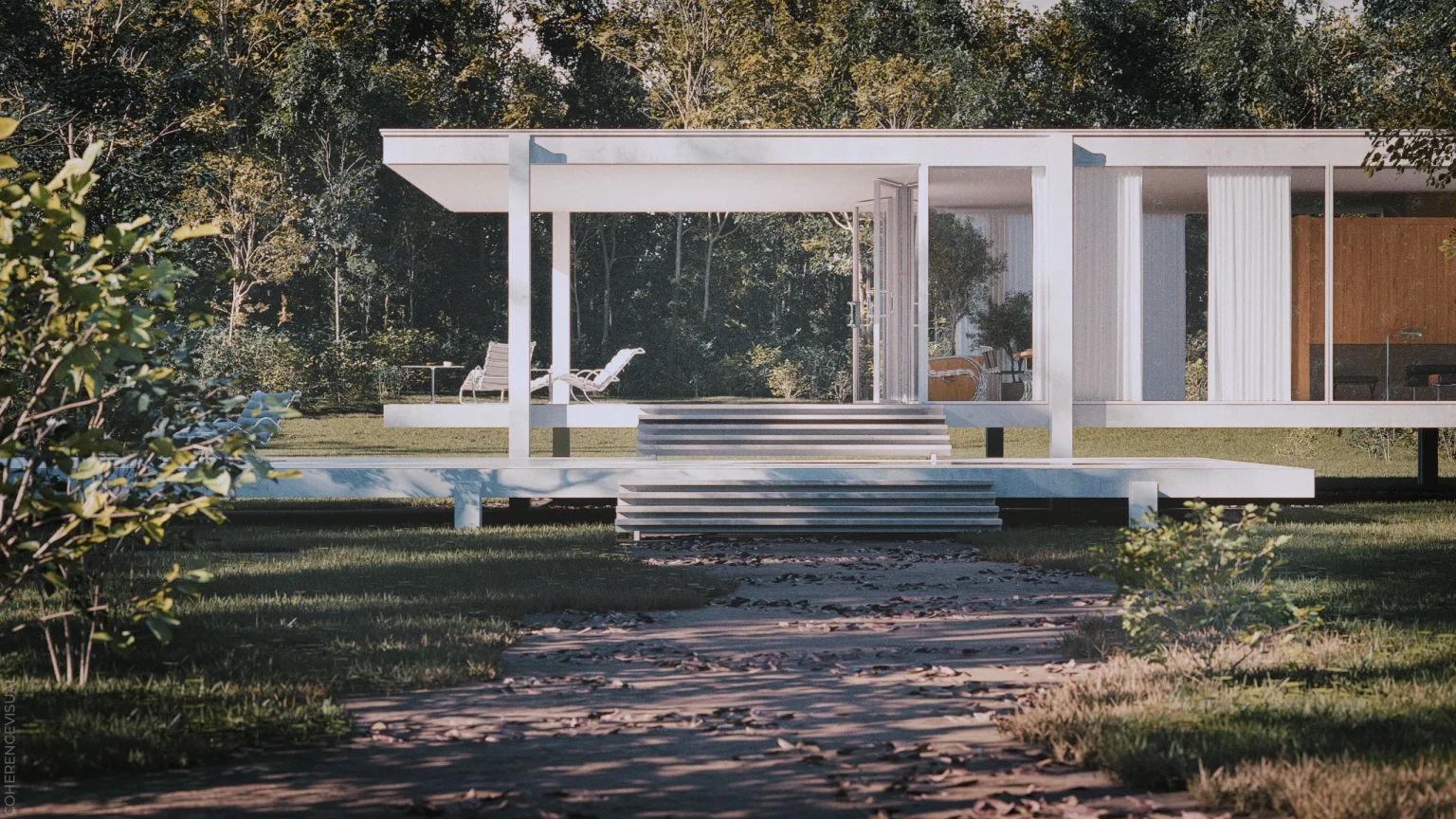
Farnsworth house - front elevation with a simple forest path.

In today’s digital landscape, video content dominates online communication.    Architectural animations are easily shareable across websites, social media, and digital campaigns — dramatically increasing engagement and visibility.    A well-crafted animation can:    Boost project appeal during investor presentations.    Attract attention on platforms like Instagram, YouTube, or LinkedIn.    Serve as a promotional film for architecture and design studios.    With optimized export settings and consistent visual branding, architectural animations become a key part of your studio’s identity and marketing strategy.

Architectural animation is one of the most powerful storytelling tools in modern visualization.    It captures motion, emotion, and light — all the elements that make architecture more than just structure.    Though it requires more time and rendering resources, the result is a cinematic, memorable experience that inspires confidence, builds understanding, and enhances client communication.    At CoherenceVisual, we create animations that do more than show — they speak with visual harmony. They communicate your design vision with precision, artistry, and atmosphere.

When to choose, architectural animations are especially recommended for:

showcasing interiors of small- to medium-scale buildings,

presenting facades and exterior concepts,

projects where mood and atmosphere are key to understanding the design.

Let’s collaborate to bring your next project to motion.

Write us an email and request a quote, or simply inquire!

Contact us today and discover how architectural visualizations can transform the way your designs are seen, understood, and remembered.