Architectural renderings

A single image can truly say more than a thousand words — especially in architectural visualization.

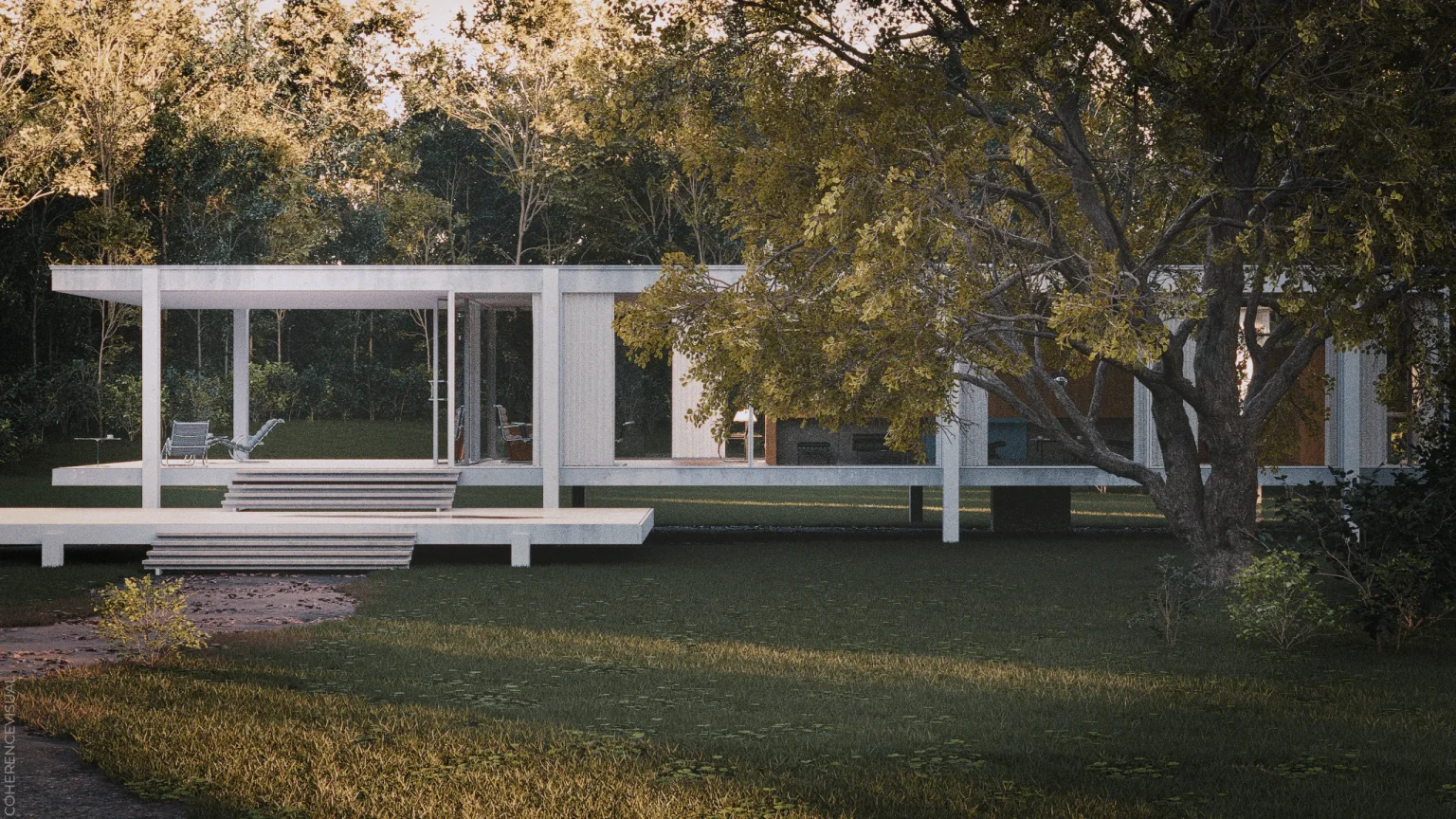
Farnsworth house - front elevation in the morning - It's a modern looking style building with steel beams and glasses. You can see inside of the building from every direction. There are a lot of tree around the building.


When design meets storytelling, renderings become the most direct bridge between concept and perception.

If you value striking detail, quick communication, and effective presentation, renderings are the perfect solution. They capture not only the shape and function of a space but also its atmosphere — the feeling it creates when imagined as a real, tangible environment.

At CoherenceVisual, our 3D rendering service allows us to highlight the essence of any project and present it in a form that works seamlessly across every platform and context — from client presentations to marketing materials, competitions, and real estate promotions.
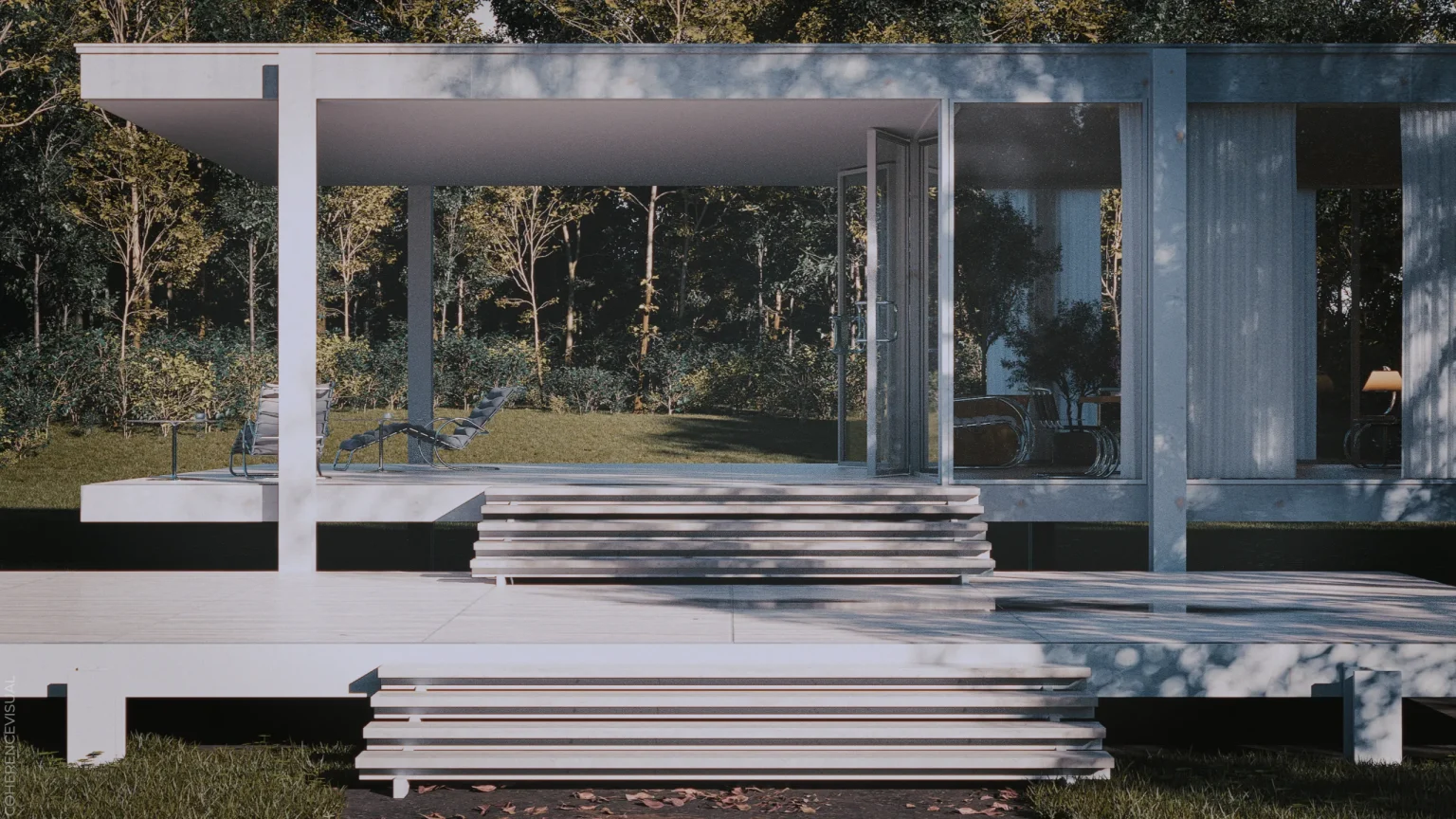
Farnsworth House - terrace in the sun - front elevation - focus on stairs

 The greatest advantage of renderings lies in their speed and impact.
When time is limited and your project needs to be shown visually as soon as possible, static images offer a fast, convincing, and emotionally engaging way to communicate your ideas.

But speed alone isn’t what makes them stand out.
High-quality renderings are valued for their precision, realism, and storytelling power. They combine technical accuracy with artistic vision, helping clients and stakeholders instantly understand what a space will feel like — long before construction begins.

Renderings turn ideas into visuals that are easy to grasp, memorable, and ready to share.

Every rendering is a carefully crafted visual composition.
Because we focus on individual frames, we can dedicate all rendering resources to achieving the highest visual quality possible.

This allows us to use physically accurate lighting simulations, advanced material workflows, and carefully balanced color grading — all designed to reflect how a building will look under real-world conditions.

The result is a set of images that not only impress visually but also support decision-making, material selection, and design validation.

That’s why architectural renderings are ideal whenever realistic detail and visual authenticity are essential.
They communicate both the technical precision of the architect and the emotional tone of the final space.

A single rendering can communicate more effectively than hours of explanation.
Within seconds, the viewer understands the form, proportions, materials, and light of a space. This clarity makes renderings a powerful language in architecture — one that transcends words and technical drawings.

In presentations, competitions, and marketing, this speed of understanding is crucial.
An effective architectural visualization saves time, eliminates confusion, and delivers a message that’s both stronger and more memorable than traditional communication methods.

With the right composition and atmosphere, a rendering can speak directly to emotion — convincing investors, clients, or the general public with visual evidence instead of abstract concepts.

Farnsworth House - focus on lower terrace

One of the most common questions we receive is:
“How many renderings should I create for my project?”

Our answer: as many as the design needs.

At CoherenceVisual, we don’t work with fixed image counts or pre-defined quotas.
Every project is unique, and the number of images should reflect the complexity, function, and story of the design.

A single image can summarize the essence, but a series of renderings creates a much richer visual narrative.
Each frame can highlight a different aspect — from the grand exterior to subtle interior details — and together they form a complete, immersive experience.

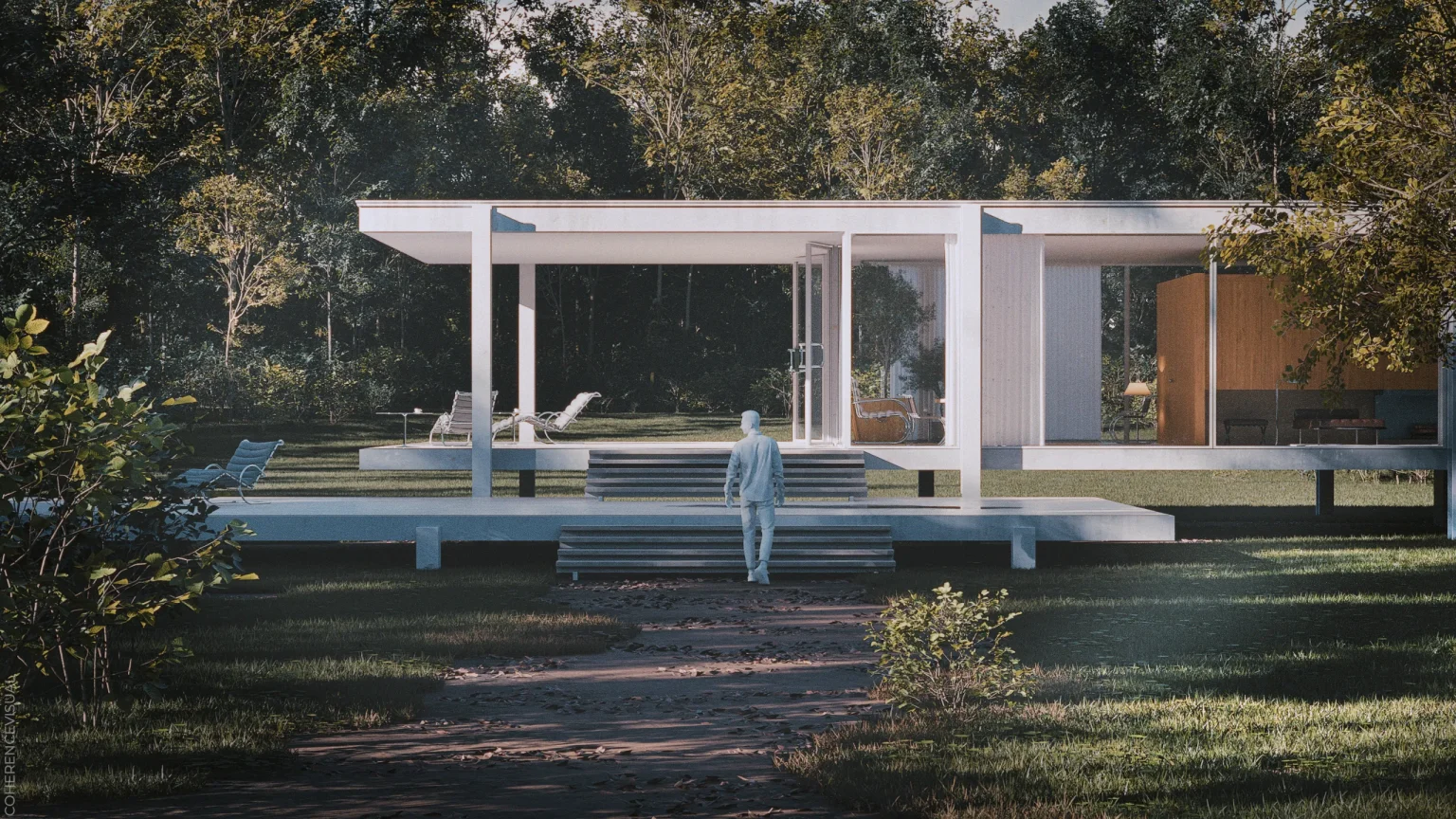
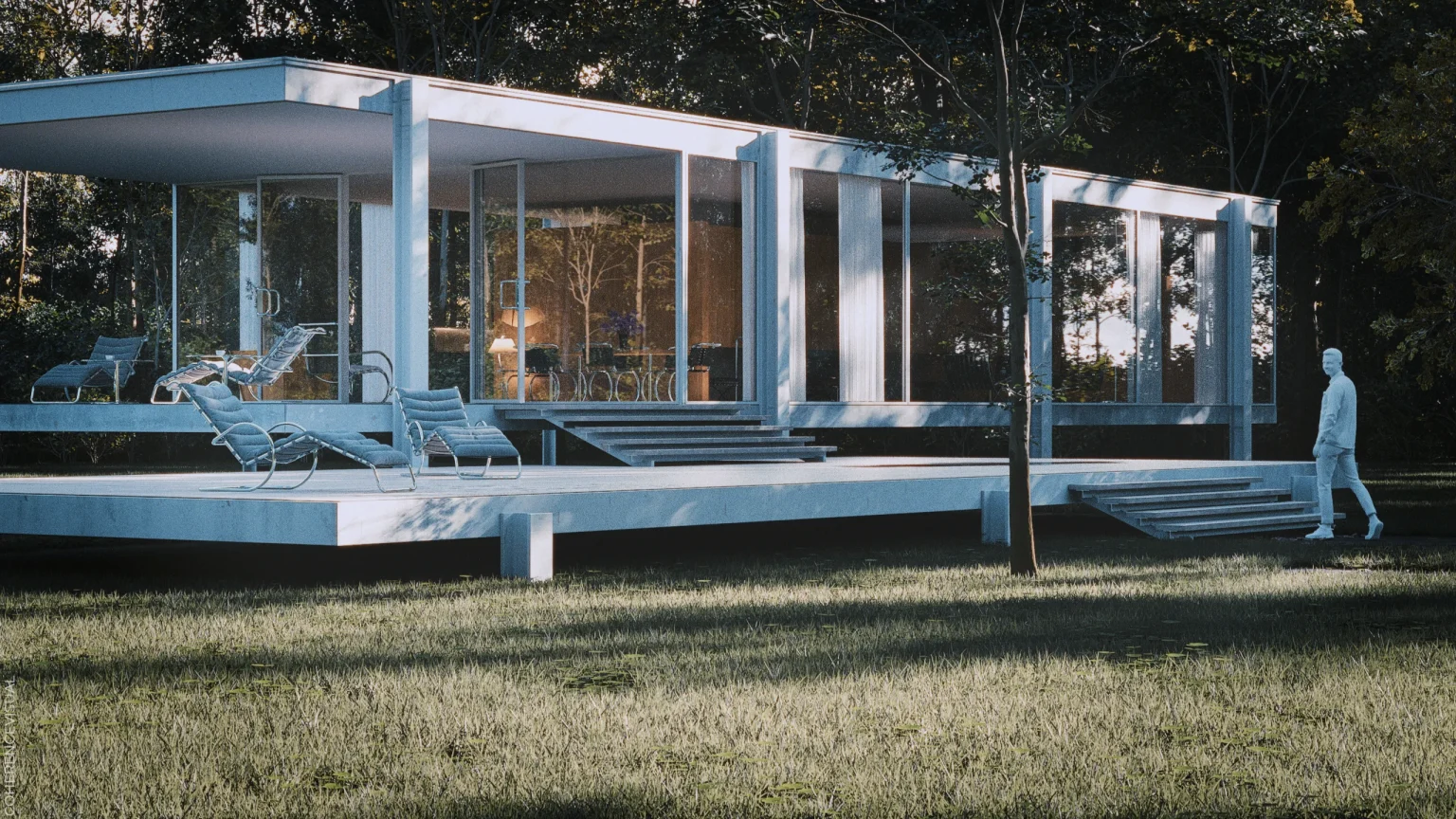
The Farnsworth House - front elevation - whit a model man in front of the stairs to see the scale

Sometimes, the best way to tell a visual story is not to show everything at once.
When viewers explore one rendering after another, they engage more deeply with the project.
They notice textures, proportions, and relationships between spaces — discovering the design as if walking through it in real life.

This gradual reveal allows each image to breathe and be appreciated on its own.
It transforms architectural visualization into an emotional journey of discovery, where each step reveals another layer of the concept.

In marketing materials or client presentations, this technique helps maintain attention and builds anticipation.
Rather than overwhelming the audience, it guides them through the vision — one scene at a time.

A single wide shot may capture the overall form, but it often hides the smaller design nuances.
By creating several complementary views, we can emphasize these details — the craftsmanship of a facade, the texture of a material, or the mood of an interior corner.

Each rendering can focus on a specific design intent, giving your audience the opportunity to explore the project’s richness at different scales.
This is especially valuable when materials, finishes, or architectural details play a central role.

Multiple renderings also enhance communication between architects, designers, and clients, making it easier to discuss design alternatives and finalize decisions before construction begins.

In our experience, architectural renderings are the ideal choice for a wide range of design scenarios, including:

Small- and medium-scale interior projects – where material mood, lighting, and proportions must be clearly expressed.

Facade visualization and material studies – perfect for comparing textures, finishes, and color schemes.

Design proposals and competitions – when you need high-quality visuals that stand out among competitors.

Marketing and real estate presentations – where photorealistic images can make a concept instantly appealing.

Renderings are particularly effective when a project demands speed, clarity, and photorealism without the complexity of animation or interactive formats.

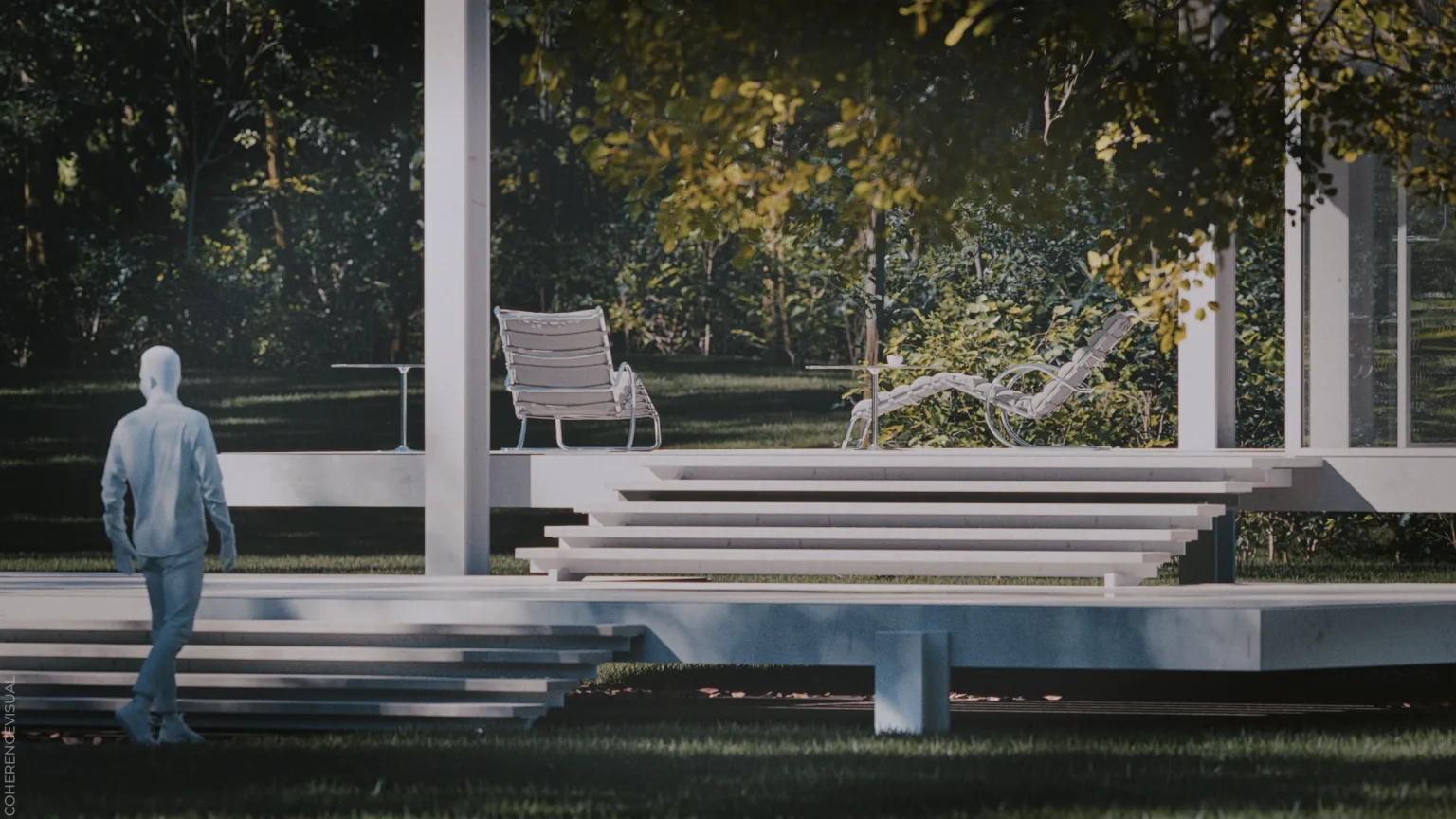
The Farnsworth House - front elevation - with a model man in front of the stairs to see the scale - focus on the stairs

Get in touch with us and let’s work together!

Would you like to create stunning renderings for your next architectural project?
Let’s collaborate and turn your design ideas into high-quality visualizations that truly reflect your vision.

At CoherenceVisual, we combine technical expertise with artistic precision to craft images that communicate, inspire, and persuade.
Whether it’s a small interior or a large-scale architectural concept, our renderings make your ideas visible and memorable.

Contact us today — and let’s make your project stand out with professional, realistic architectural visualization.